
I’ve had swimmers stop mid-set, yank their goggles off, and ask me flat out: “Coach, are these still worth wearing?”
And every time, I can tell before I even look. There’s a specific frustration – the constant stop at the wall to dump water out, the fog that won’t quit no matter what you try, the strap that slips every fifty meters.
I’ve seen it a hundred times at practice, and the answer is almost always the same: those goggles are done.
The thing most swimmers don’t realize is that goggles are consumables. They’re not boots you break in and wear for a decade. When should you replace your swim goggles? Sooner than you think – and there are very specific signs to look for.
🏊 Quick Summary – Key Takeaways
- Competitive swimmers typically replace goggles every 3–6 months due to heavy chlorine exposure.
- Casual swimmers can get 1–2 years out of a pair – if they care for them properly.
- #1 dead-goggle test: Press the goggle cup against your eye socket without the strap. If it falls off immediately, the silicone gasket is gone.
- Biggest mistake: Touching the inside of the lens – even once with a finger – strips the factory anti-fog coating permanently.
⚠️ Safety Disclaimer & Target Audience
Best for: Pool swimmers (lap, masters, competitive) and open water swimmers.
Note: In open water, degraded goggles aren’t just inconvenient – impaired vision is a genuine safety risk. Replace them before your next open water race or event.
Coach’s reminder: This is gear advice, not medical advice. If you experience eye irritation from goggle wear, consult an eye care professional.
How Long Should Swim Goggles Actually Last?
The honest answer is: it depends entirely on how often you’re in the water and what that water contains.
Here’s the breakdown I use with my athletes:
Competitive swimmers (daily training, 10–20+ hours/week in chlorinated pools) realistically get 3–6 months per pair.
Chlorine is relentless at breaking down every material in the goggle – silicone seals, strap elasticity, and lens coatings all degrade faster under that kind of volume.
As SwimSwam notes, goggles are among the highest-turnover items for competitive swimmers, precisely because of daily chlorine exposure.
Recreational swimmers (2–3x per week, or less) can reasonably expect 1–2 years from a quality pair – provided they rinse them after every session and store them properly.
The same pair that lasts eight months on a college swimmer might last eighteen months on a masters swimmer who’s in the water three times a week.
The key variable isn’t the calendar. It’s chlorine hours. A goggle that sees 300 hours of pool time in a year is far more degraded than one that sees 50 hours, even if both are “one year old.”
One other factor nobody talks about: UV exposure. Leaving your goggles in a hot car or on a sunny pool deck accelerates the breakdown of silicone and elastic materials just as aggressively as chlorine does.
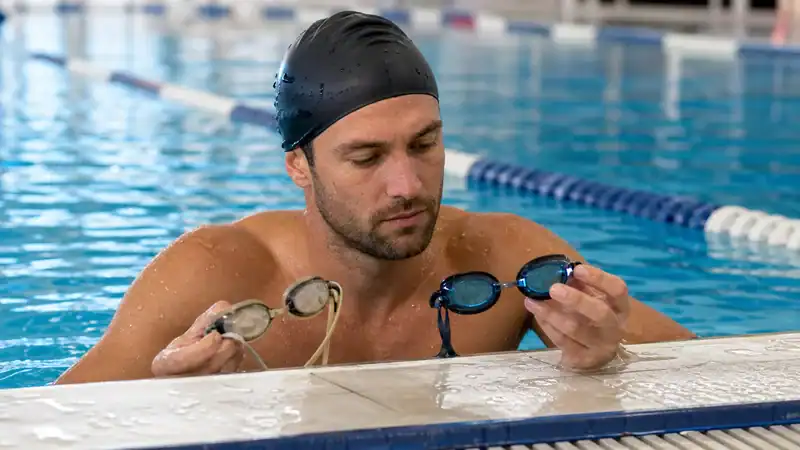
Four Signs Your Goggles Are Officially Dead
I’ve had athletes try to squeeze another season out of a pair that was clearly finished. The problem isn’t just performance – it’s that bad goggles ruin your focus in the water. Here are the four signs that tell me it’s time.
The Dry Suction Test Fails Every Time
This is the most reliable field test you can run, and most swimmers have never heard of it.
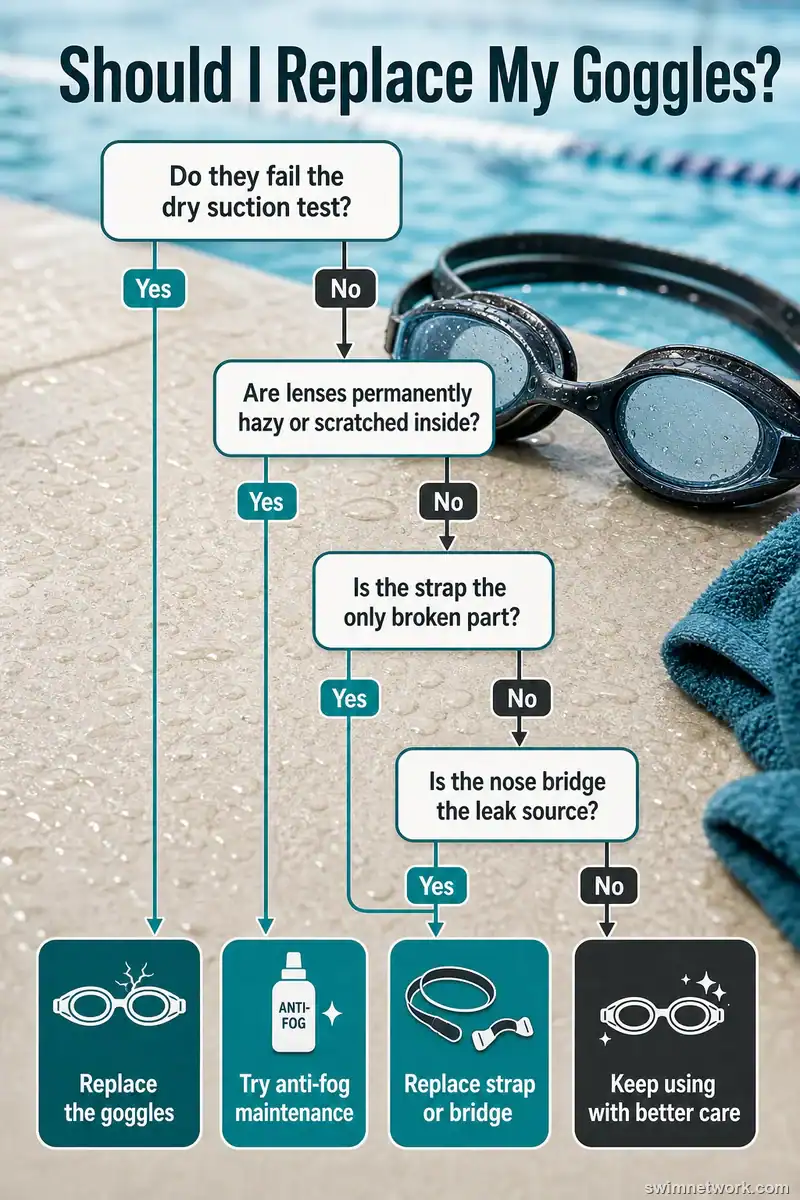
Take your goggles – no strap attached or pulled aside – and press one lens cup firmly against your eye socket. Release your hand. If the silicone gasket is still healthy, the cup should hold a light suction for at least a second or two.
If it falls off immediately, the silicone has hardened, warped, or cracked from chlorine exposure. No amount of tightening the strap will fix that.
You’re just creating pressure marks on your face and still leaking water. The Global Triathlon Network’s testing specifically flags over-tightening as a sign that the gasket has failed – swimmers compensate by cranking the strap, which makes the problem worse.
That failed suction test is the clearest signal I know that the gasket is done, and the gasket is what keeps water out. Full stop.
The Anti-Fog Coating Is Completely Stripped
Fogging is the most common complaint I hear, and it’s often fixable – right up until the point where it isn’t.
Factory anti-fog coating is a thin chemical layer applied to the inside of the lens. As Swimming World Magazine confirms, this coating naturally wears off over time under regular pool use. That’s normal, and anti-fog sprays can extend the life of your goggles once it starts to fade.
But there’s a point of no return: when the lens itself is permanently cloudy, micro-scratched on the inside, or visibly hazed even after a rinse – that’s the polycarbonate plastic degrading, not just the coating wearing off.
At that stage, no spray fixes it. If you want to know how to maintain the coating while it’s still salvageable, check out our full guide on how to keep swimming goggles from fogging up.
Once you’re past that point, replace them.
The Strap Snaps or Loses All Elasticity
A goggle strap that’s been through hundreds of chlorine sessions eventually gets brittle. You’ll notice it before it snaps – it starts to feel “crusty,” stiff, or powdery. It loses its stretch, which means it stops distributing pressure evenly, which means the goggles sit poorly no matter how you adjust them.
Here’s the good news: a broken strap alone doesn’t automatically mean new goggles. Replacement straps and bungee strap conversions are widely available and can breathe new life into an otherwise healthy pair.
But if the strap is going brittle at the same time the gasket is hardening? That’s a pair that’s aged out across the board.
You Notice Micro-Scratches on the Lenses
Scratches on the outside of the lens are common and largely cosmetic. Scratches on the inside of the lens are a different problem entirely.
They cause glare and visual distortion in the water, especially in outdoor or brightly lit pools. And unlike a car windshield, you cannot polish these out.
Trying to buff polycarbonate lenses will destroy the anti-fog coating, roughen the surface further, and make the visibility problem worse. There’s no recovery – replace them.
The Difference Between “Broken” and “Needs Maintenance”
Before you throw out a $60 pair of goggles, let’s be clear about what’s actually fixable and what isn’t.
Fixable:
- Snapped strap → Buy a replacement silicone or bungee strap. Many goggle manufacturers sell them separately.
- Wrong nose bridge size → A leaking nose bridge usually just means the bridge is too wide or too narrow for your face. Swap it out. Most mid-range and competitive goggles come with multiple bridge sizes.
- Mild fogging → Anti-fog spray, or the “spit trick” as a one-session emergency fix. (Yes, it’s temporary. No, it doesn’t mean your goggles are dead.)
Not fixable:
- Hardened, warped silicone gaskets that fail the suction test
- Permanently hazed or micro-scratched lenses
- Structural cracks in the frame or lens cup
If your leaking is coming from the seal and not the nose bridge, our guide on why swim goggles leak and how to fix the seal walks through the diagnostic process before you start swapping parts.
📹 Video Quick Recap:
- Over-tightening the strap is the #1 mistake – it signals the gasket has failed, not that the strap needs adjustment.
- The dry suction test is the definitive field check for gasket health.
- Wrong nose bridge size causes leaking that no strap adjustment can fix.
- Many “broken” goggles just need a nose bridge swap or strap replacement – not a new pair.
How to Double the Lifespan of Your Next Pair
The swimmers who consistently get more life out of their gear aren’t buying better goggles – they’re just taking care of them. It also starts with picking the right pair from the beginning — our swim goggle selection guide covers fit testing, lens types, seal verification, and what to look for before you buy.
Here are the four rules I give every athlete I coach:
1. Never touch the inside of the lens. Ever. Not with a finger, not with a cloth, not with a tissue. One wipe strips the factory anti-fog coating – permanently. If debris gets on the inside, rinse it off with cold water. That’s it.
2. Rinse in cold fresh water immediately after swimming. Chlorine and salt continue degrading silicone and coatings if left to dry on the material. A thirty-second cold rinse after every session is the single highest-impact habit for goggle longevity.
For a full breakdown of how to clean them properly, here’s our guide on how to clean swimming goggles in four simple steps.
3. Never leave them in a hot car or in direct sunlight. Heat accelerates the breakdown of the polycarbonate lens and silicone seals just as aggressively as chlorine. A car left in the summer sun can reach temperatures that degrade a goggle’s seals and coatings faster than weeks of pool use.
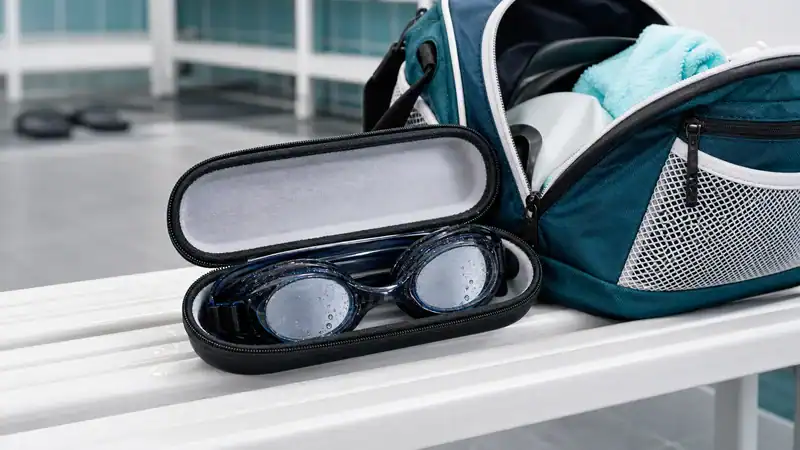
4. Store them in a hard goggle case. Not loose in the bottom of your swim bag. Not wrapped in a towel. A hard goggle case protects the lens from scratches and keeps the frame from getting bent while everything else in your bag shifts around. Most quality goggles come with one – use it.
Do all four of these consistently, and you’ll get significantly more life out of every pair you buy.
Frequently Asked Questions About Swim Goggles
Can you fix a scratched swim goggle lens?
No – not in any practical sense. Polycarbonate lenses have factory-applied optical coatings that cannot be restored once scratched.
Attempting to buff or polish the lens surface destroys the anti-fog layer, increases light scatter, and typically makes visibility worse, not better.
If the inside of the lens is scratched, replace the goggles.
Why do my new goggles already fog up?
Almost certainly because the inside lens was touched or rinsed in hot water before use – both strip the factory anti-fog coating on contact.
It also happens if new goggles are stored against fabric (e.g., inside a bag without a case), which can abrade the coating over time.
If your new pair is already fogging after the first session, inspect the inside lens for fingerprints or fine scratches, and use an anti-fog spray as a bridge while you decide whether to return them.
Does pool chlorine ruin swim goggles faster than saltwater?
Chlorine is a well-documented degradation factor for silicone seals and elastic straps – it breaks down the material chemistry at a molecular level with repeated exposure.
Saltwater also degrades goggles, but primarily through salt crystal accumulation if the goggles aren’t rinsed after ocean swimming.
The key takeaway: both environments require a cold fresh-water rinse after every use. Don’t assume ocean swimming is gentler on your gear without that rinse.
Your Leaky Goggle Days Are Over
Here’s what I’ve noticed after years of coaching: swimmers who are fighting their gear don’t swim as well. It sounds obvious, but when you’re constantly stopping to adjust leaking goggles or waiting for your vision to clear, your attention is off the work.
A fresh pair… honestly, it changes your whole session. Clear vision, no leaks, no face pressure. It sounds like a small thing. It isn’t.
If you’ve run the suction test and failed it, if the fog won’t quit, if you’re cranking the strap just to get through a set – you already know. Stop delaying the upgrade.
And when you’re ready to pick the next pair, here’s exactly how to choose the perfect swimming goggles for your face and your event so you don’t end up right back here in three months.
Disclosure: This article features AI-assisted imagery to help provide a more intuitive and visual reading experience.

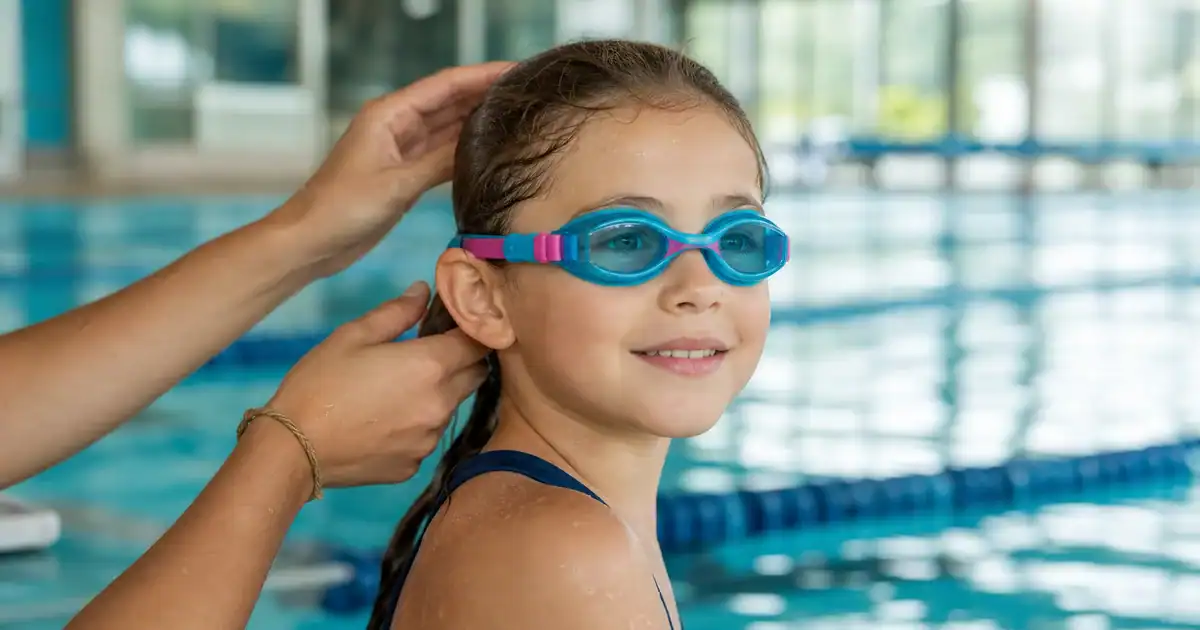 How to Find Swim Goggles That Fit Your Kid Without Tears
Leave a Reply