
I’ve watched it happen poolside more times than I can count – a swimmer pushes off the wall, their goggles catch, and half a second later they’re yanking silicone away from a tangle of hair. Every single time, someone asks me: “Is there a better option?”
There is, and it usually costs less than five dollars. We’ll cover the mechanical differences between bungee straps and silicone straps, when each one makes sense, and how to install a bungee strap on just about any frame.
One caveat before we start: if your goggles are leaking, that’s a seal problem, not a strap problem – check our guide on how to choose the perfect swimming goggles for fit help.
🏊 Quick Summary – Key Takeaways
- Bungee straps use a woven elastic cord and plastic toggle – easier to adjust, gentler on hair, often more durable in chlorinated water.
- Silicone straps have a flatter, lower-profile design – cleaner setup for race day, but harder to adjust and rougher on hair.
- Both strap types hold a proper seal. Neither one creates a seal if your gasket or fit is off.
- For most daily training swimmers: bungee wins on comfort and convenience.
- For race day with a tight cap: silicone’s lower profile is the cleaner choice.
⚠️ Safety Disclaimer & Target Audience
Best for: Competitive and recreational fitness swimmers looking to upgrade comfort or troubleshoot strap issues.
Skip if: You’re looking for help with goggle leaks or fit – strap choice doesn’t fix those. Check your gasket seal and nose bridge first.
Coach’s reminder: Never overtighten a strap to stop leaking. It won’t fix the problem and it will cause eye pain.
What Actually Changes When You Swap Silicone for Bungee
The difference between these two strap types is more mechanical than most swimmers realize.
A standard silicone strap is flat, smooth, and splits into two thin bands at the back of the head.
You adjust it by pulling the ends through small side buckles – a process that usually requires two hands and a certain amount of fiddling, especially when your hands are wet.
A bungee strap is a round woven elastic cord arranged as two separated bands – one upper band and one lower band – with a cord lock toggle at the back.
The toggle is the small plastic clip you squeeze to loosen and release to lock. You can adjust tension with one hand in under two seconds. You can do it between sets without taking your goggles off.
Here’s a side-by-side at a glance:
| Feature | Bungee Strap | Silicone Strap |
|---|---|---|
| Adjustment speed | One-hand toggle, seconds | Two-hand buckle, slower |
| Profile at back of head | Round cord + toggle | Flat split bands |
| Hair friction | Low – cord glides over hair | High – flat silicone grips |
| Race-day stealth | Bulkier toggle under a cap | Cleaner, lower profile |
| Typical price | Under $5 | Included with goggles |
| Replacement ease | Universal sizing, clip-in/tie | Varies by goggle brand |
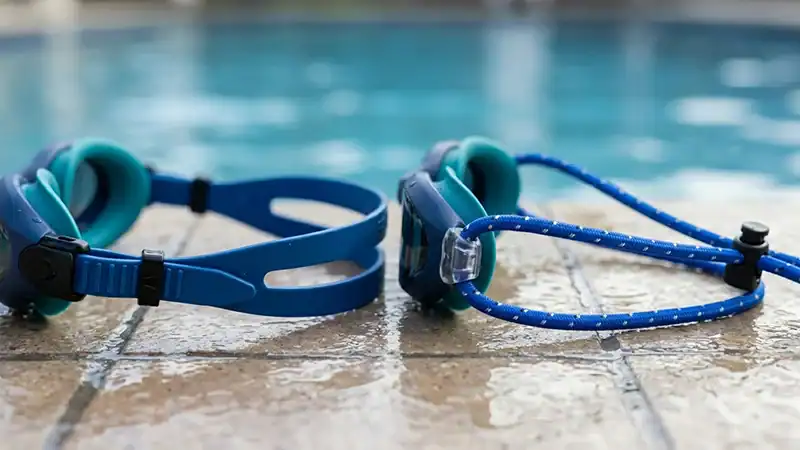
The split strap design on most silicone pairs stabilizes the goggle by distributing tension across two contact points. Bungee straps achieve a similar result with two separated cord bands that should stay apart, not stuck together as one thick loop. Both work. The question is which trade-off matters more for how you train.
According to SwimSwam’s review of comfort-focused goggle straps, the biggest benefit swimmers report from bungee-style replacements isn’t longevity – it’s the ability to quickly adjust tension without breaking rhythm between intervals.
Chlorine Breaks Down Flat Straps Before You Notice
Most swimmers don’t notice silicone strap degradation until it happens catastrophically.
Chlorine, UV exposure, and repeated stretching gradually break down the elasticity in flat silicone over time. The strap doesn’t announce it’s failing – it just becomes less springy, then one day it snaps mid-set or loses its ability to hold tension.
Woven shock cords are easier to inspect for wear and often easier to replace before failure. Because the cord is round and woven (not flat silicone), the chlorine exposure is different, and many swimmers report getting longer usable life from them – though actual longevity depends heavily on how often you rinse your gear after practice.
One practical habit: run your fingers along any strap every few weeks. If a silicone strap feels tacky, brittle, or starts to crack along the edges, that’s your warning sign.
Save Your Hair and Skin From the Silicone Grip
This is the one I hear about constantly – especially from swimmers with longer hair or those who wear a cap.
Flat silicone grips whatever it touches. When you put your goggles on over a cap, the strap sits on the silicone surface of the cap. When you pull your cap off after practice, there’s friction. That friction catches hair, pulls at the strap, and if you’re not careful, comes off with a clump attached.
A round bungee cord doesn’t have the same surface grip. It glides more smoothly against a cap and against hair, which makes post-swim removal significantly less painful – especially for swimmers who wear their goggles over a looser cap, or those who don’t use a cap at all.
This pairs naturally with choosing the right cap. If you have long hair and you’re already dealing with strap friction, our guide on the best swim caps for long hair covers cap fit choices that reduce that whole tangled mess at the back.
The skin sensitivity angle is worth addressing carefully too. Some swimmers experience irritation where straps contact the skin, particularly behind the ears and at the nape of the neck.
In rare cases, goggle-related skin reactions have been documented – a 2020 case report in the journal Dermatitis describes allergic contact dermatitis of the eyelids linked to swim goggle materials. This is uncommon, and the research addresses goggle material broadly rather than isolating strap type specifically.
If you’re experiencing persistent skin irritation from your equipment, that’s worth a conversation with a dermatologist rather than a strap swap alone.
The practical upshot: the round, woven surface of a bungee cord does reduce friction compared to flat silicone. Whether that makes a meaningful difference for your skin depends on your situation.
The USMS Goggle Strap 4-1-1 guide is worth reading if you want a wider view of strap types and how different configurations affect fit and comfort – including bungee-style squeeze-button options.
Race Day or Daily Practice – Where Each Strap Makes Sense
Here’s where I’d push back on the idea that bungee is always better.
For race day – especially if you’re swimming under a tight racing cap – the plastic toggle at the back of a bungee strap adds bulk that a flat silicone strap doesn’t. That toggle sits against the back of your head and creates a slightly raised profile under the cap. It’s not dramatic, but it’s there.
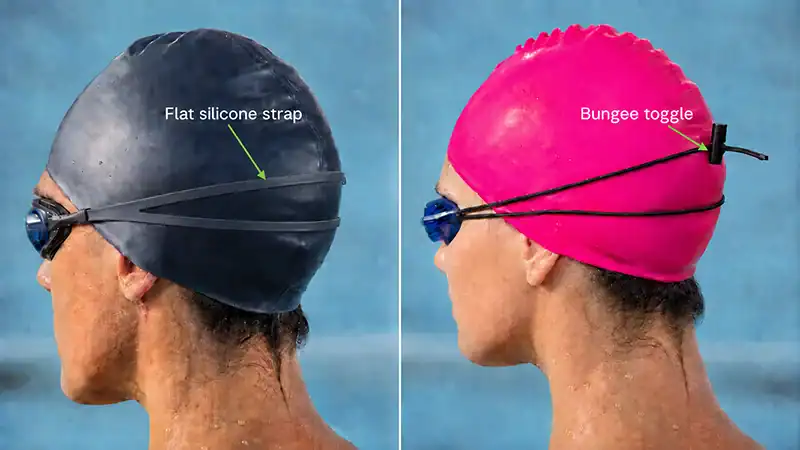
A silicone strap, by contrast, tucks almost flush with the back of the head. For swimmers who care about every variable on race day, that cleaner profile is worth keeping.
There’s also the adjustment question at a meet. Silicone buckles are fussier, but most elite swimmers have a pre-set adjustment they don’t change between races.
The convenience advantage of bungee matters a lot more during training sets – where you’re pulling goggles on and off, making micro-adjustments between heats or events, and generally moving faster.
My take: keep your silicone straps for race day. Put a bungee strap on the pair of training goggles you use 95% of the time.
How to Thread a Bungee Strap Without Twisting the Cord
This is the step most guides skip. They tell you to buy a bungee strap, then assume you’ll figure it out. You usually do – but there are a couple of ways to make it messier than it needs to be.
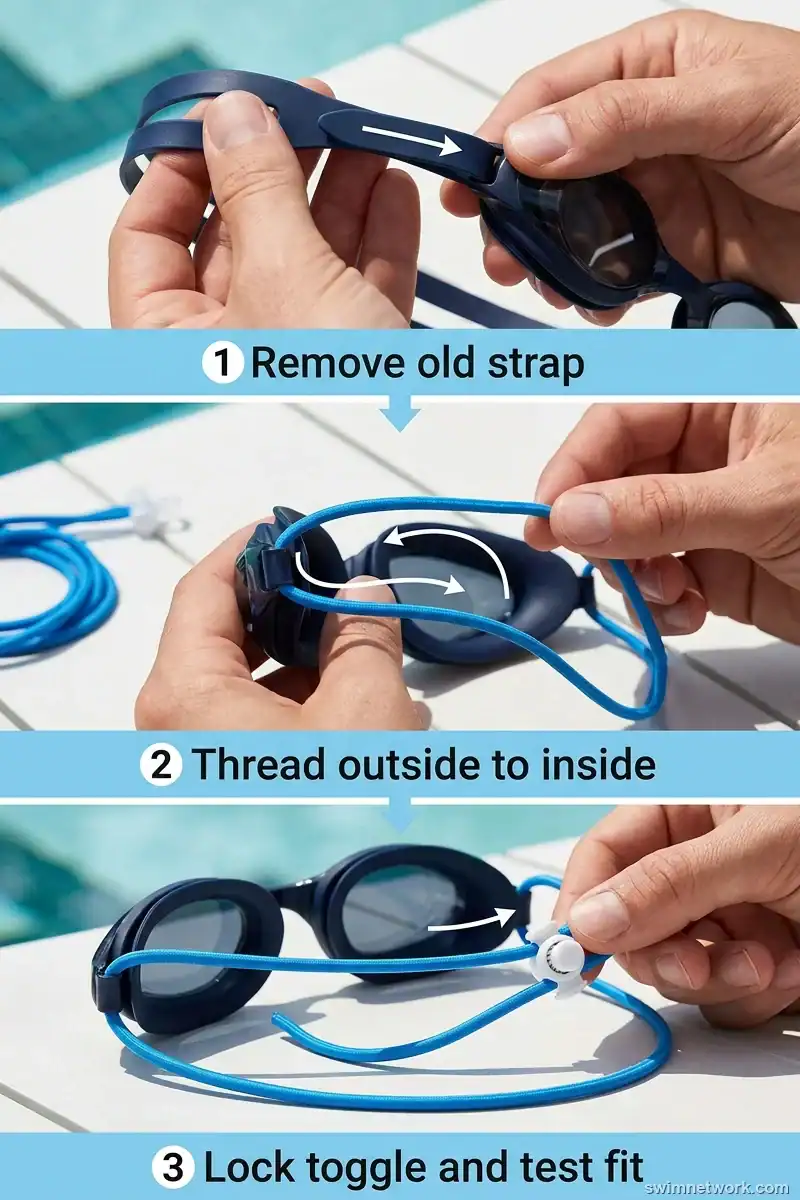
Step 1 – Remove the old strap.
Most goggle frames have a small molded notch or post on each side. The old strap loops through or clips around this. Work it out from one side first, then the other. Some frames require a small flat tool to push the strap channel open; most you can do with your fingers.
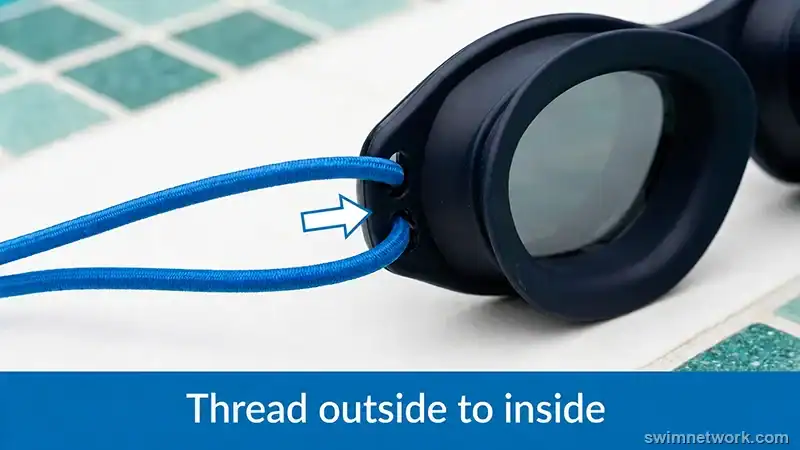
Step 2 – Thread the elastic cord through the eyelets from outside in.
This is the direction that matters. Thread from the outside of the frame inward – not from the inside out. Running it the wrong way rotates the cord as it crosses the back of your head and creates a twist that affects tension distribution. Once through both eyelets, pull a few inches of cord through on each side.
Step 3 – Slide the toggle onto the upper and lower bands, then set your tension.
Feed the separated upper and lower bungee bands through the cord lock toggle until the goggles sit the way you want them. Squeeze the toggle, release it, and test the tension by doing a dry fit against your face. Adjust until the seal holds without any pressure-headache tightness.
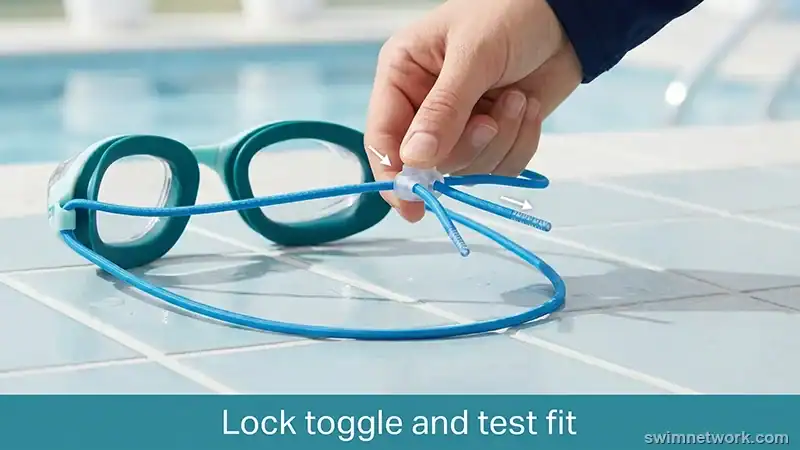
If the strap maker includes trimming instructions, follow them. Don’t improvise with heat or a lighter unless you’re confident with that process – a frayed or melted tip can jam the toggle.
📹 Video Quick Recap:
- Thread the cord through the goggle eyelets – direction matters for avoiding twists.
- The plastic toggle is the key mechanism: squeeze to open, release to lock tension.
- Dry-fit test before swimming – the seal should hold without tightening enough to hurt.
- Bungee straps are universal for most standard goggle frames.
The “Too Tight” Mistake Most Swimmers Make
I need to say this clearly, because I see it constantly: tightening your strap will not fix a leaking goggle.
If water is coming in, the strap tension is almost never the problem. The problem is the gasket seal, the nose bridge fit, or both. Cranking a bungee strap tighter just moves the pressure to your eye socket and causes headaches.
If your goggles are leaking, start there – check the seal and frame fit first. We go deep on that in our guide on why swim goggles leak and how to fix the actual problem.
Questions I Hear at the Pool Wall Every Season
Do bungee straps fit any pair of swim goggles?
Most standard bungee straps are designed as universal replacements and will fit the majority of recreational and competitive goggle frames.
The exceptions are specialty racing goggles with proprietary strap channels or very narrow eyelets. If you’re unsure, check the eyelet diameter on your frame before buying – most bungee cord sets include sizing notes.
Are bungee straps allowed in swim meets?
Yes. There are no rules in USA Swimming, FINA, or World Aquatics regulations that prohibit bungee-style goggle straps. Goggles must simply be worn over the cap – strap type is not regulated.
That said, for elite-level competition, many swimmers prefer the lower profile of a silicone strap tucked under a racing cap.
Will a bungee strap fix my leaking goggles?
No – and this is worth repeating. A leaking goggle is almost always a gasket or fit problem, not a strap problem.
A bungee strap adjusts tension and improves comfort, but it cannot fix a degraded gasket, a mismatched nose bridge, or a frame that doesn’t seal to your face shape. Fix the fit first.
So, Which Strap Should You Pack in Your Swim Bag?
Honestly… it depends on how you use your goggles.
If you’re a daily trainer who switches goggles on and off between sets, loses count of how many times you’ve re-adjusted mid-practice, or if you’ve ever left a chunk of hair on a poolside bench – bungee is probably the upgrade you’ve been putting off.
If you’re a competitive swimmer who races under a tight cap and has a pre-set strap tension you never touch, silicone’s clean profile is still worth keeping for meet day.
The answer I give most of my swimmers: buy a bungee strap, put it on your practice goggles, and keep the silicone pair clean for competition. At under five dollars, it’s a pretty low-stakes experiment. And the next time you flip-turn without ripping your hair out… you’ll know it was worth it.
If you’re still narrowing down which goggles to pair the strap with, our guide on choosing swim goggles and caring for them long-term covers fit, lens types, anti-fog care, and replacement signals.
Disclosure: This article features AI-assisted imagery to help provide a more intuitive and visual reading experience.

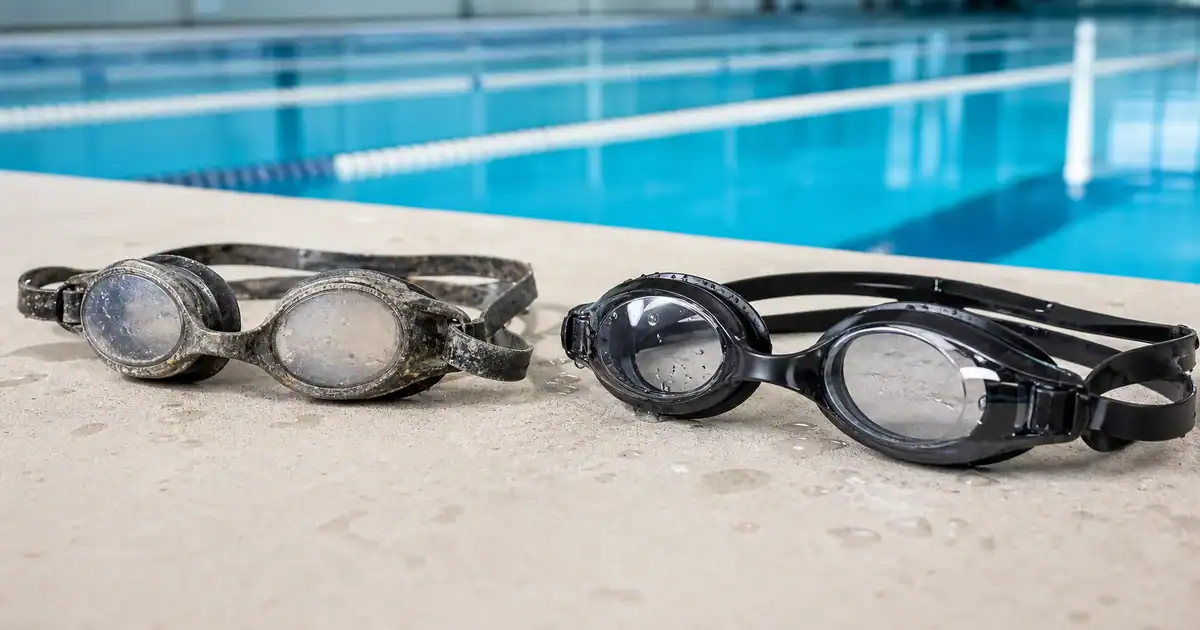 How Long Do Swim Goggles Last – And When Should You Replace Them?
Leave a Reply